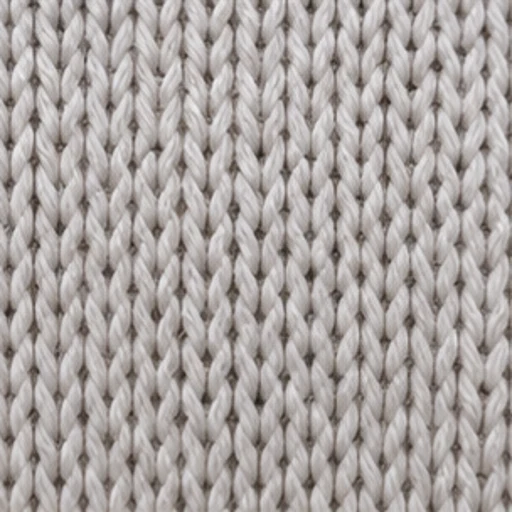
Plain knit / Single jersey
V-shaped face stitches; curved loops on the reverse.
- Function
- Relatively smooth basic fabric
- Common location
- Leg / instep
Side note: Plain knit can still stretch.
 EVARWINSTART A PROJECT ↗
Explore the main parts of a sock and recognise common knitting structures through colour-coded zones and fabric illustrations.
PUBLISHED 2026-10-13
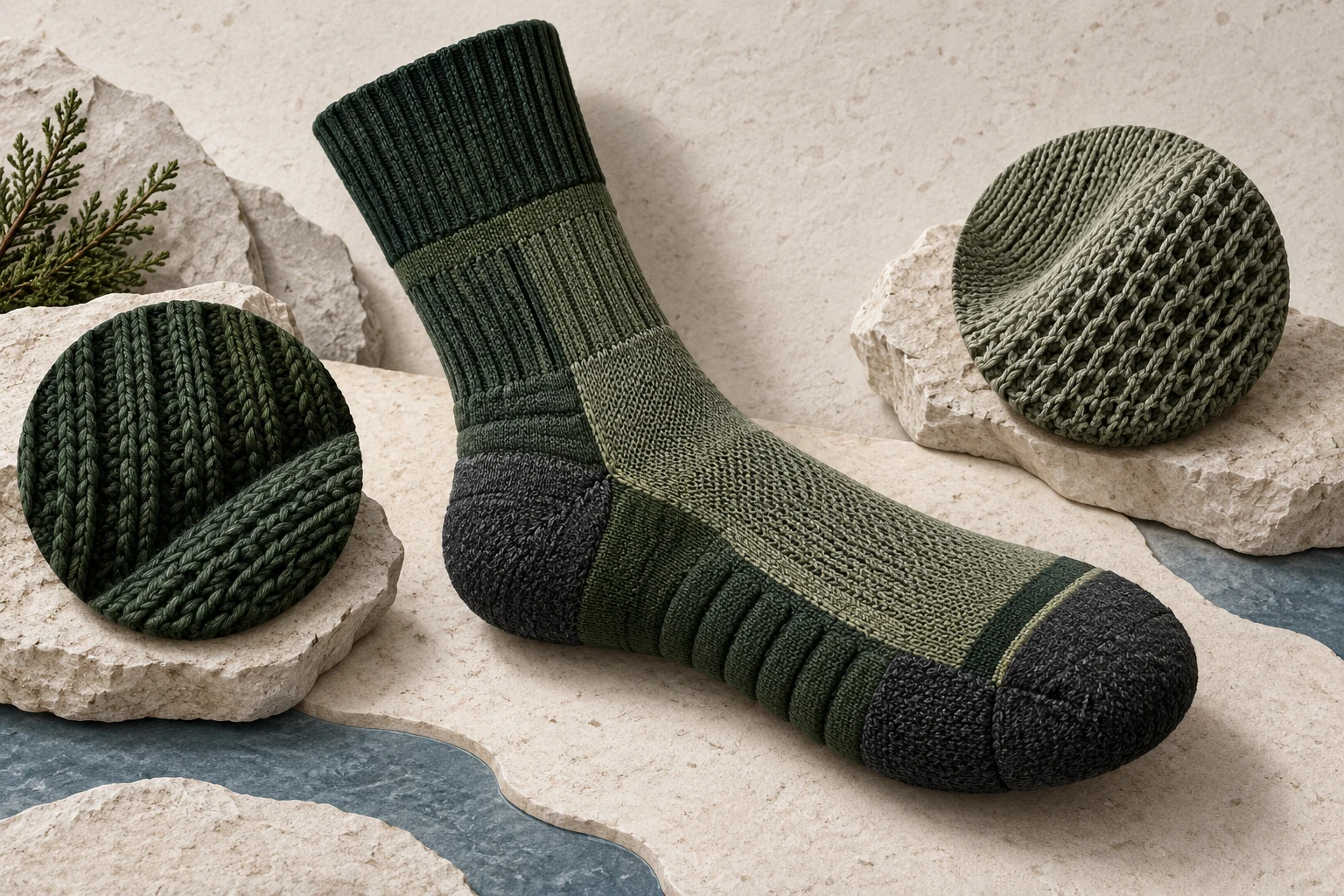
A sock combines different knitting structures to provide fit, cushioning and texture in specific areas. This guide introduces the main parts of a sock and the structures commonly used in each.
The fluorescent colours in the illustration identify eight common design zones. They represent placement options, not features required in every sock.
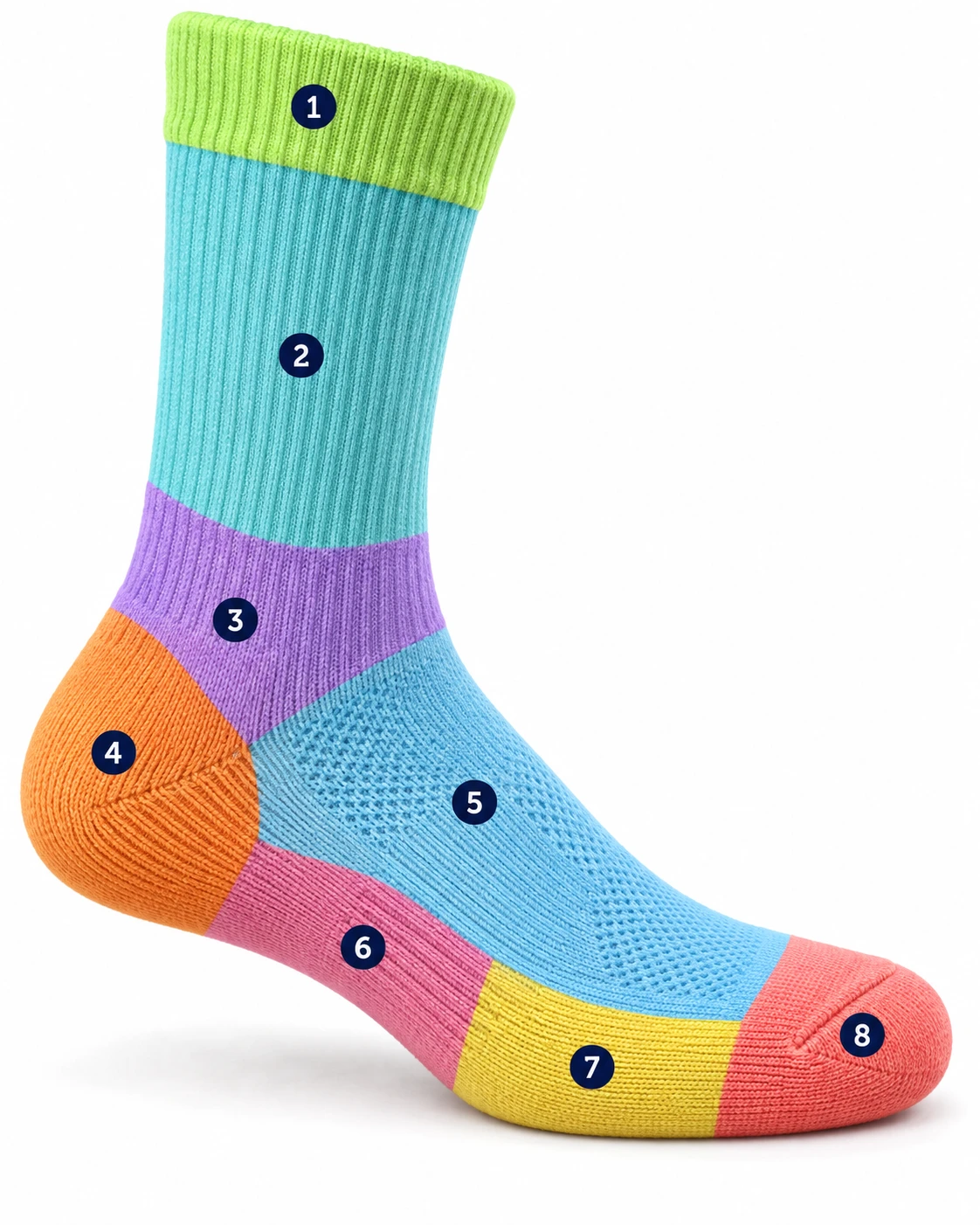
True rib, mock rib, double welt, elastic inlay
Finishes the opening and helps retain the sock.
Plain knit, rib, jacquard
Forms the shaft and accommodates textures or graphics.
Shaped knitting, elastic placement
Adjusts fit between the leg and foot.
Shaped knitting, terry, reinforcement yarns
Accommodates the heel with optional cushioning and reinforcement.
Plain knit, mesh
Controls thickness and provides more open fabric areas.
Elastic placement, stitch-size adjustments
Adjusts local fit around the midfoot.
Plain knit, terry, reinforcement yarns
Allows cushioning beneath the front of the foot.
Shaped knitting, plain knit or terry, reinforcement yarns
Accommodates the toes with optional cushioning and reinforcement.
Each close-up illustrates how the structure or construction can appear in a sock. Images are generated appearance illustrations, not photographs of Evarwin production samples or technical stitch charts.
V-shaped face stitches; curved loops on the reverse.
Side note: Plain knit can still stretch.
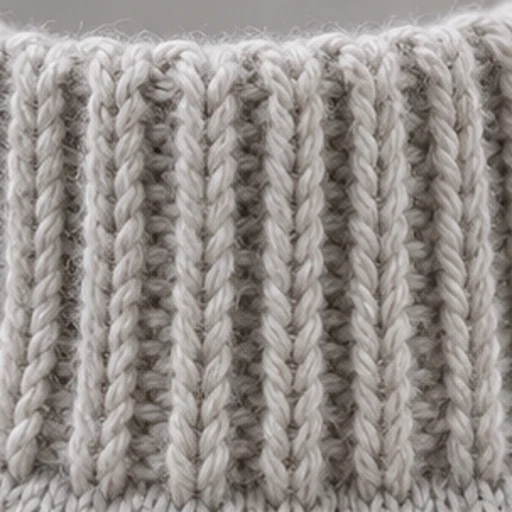
Alternating knit and purl columns.
Side note: Requires suitable machine configuration.
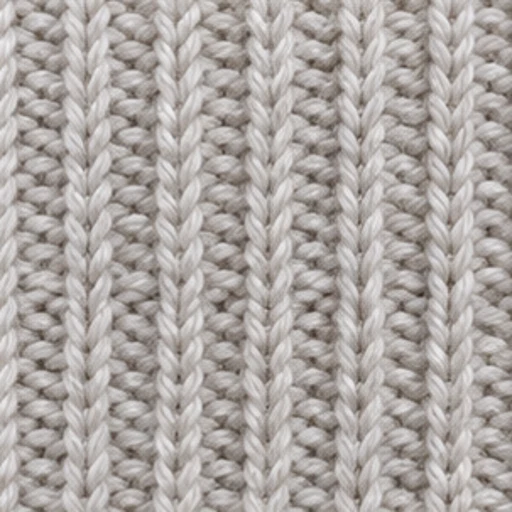
Vertical textures resembling ribbing.
Side note: Appearance alone does not confirm true rib.
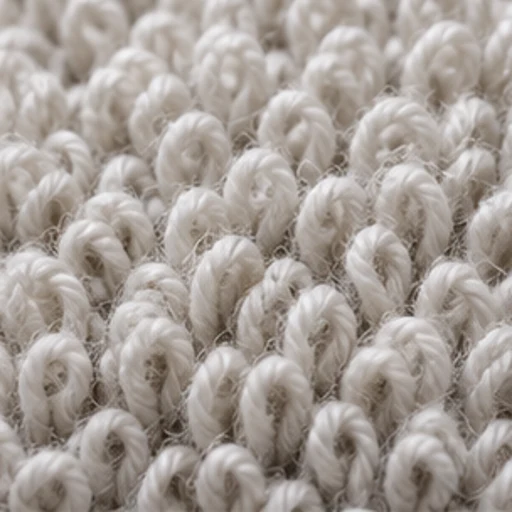
Raised yarn loops, usually inside.
Side note: Loop height, density and yarn influence the result.
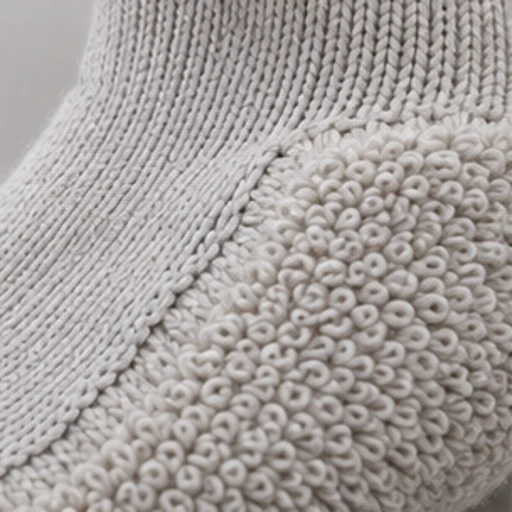
Selected areas are cushioned; others are not.
Side note: Half describes coverage, not loop height.
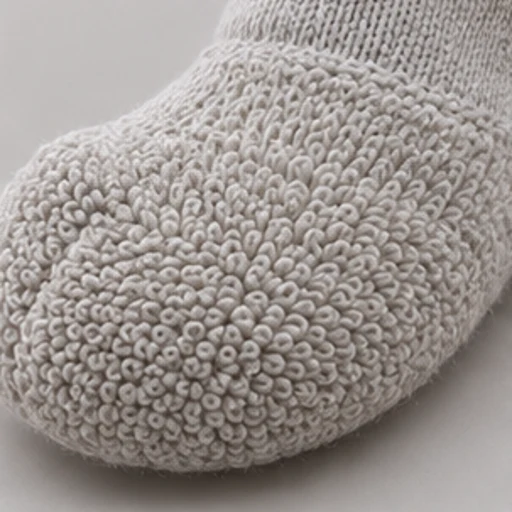
Terry over a broad area.
Side note: Specify whether cuff, heel and toe are included.
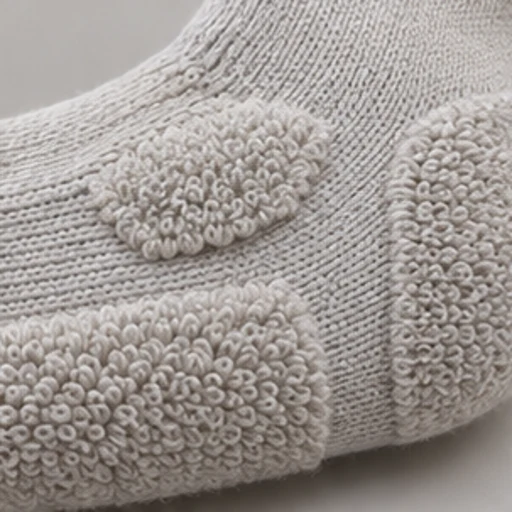
Defined terry patches or patterns.
Side note: Needs suitable terry-selection capabilities.
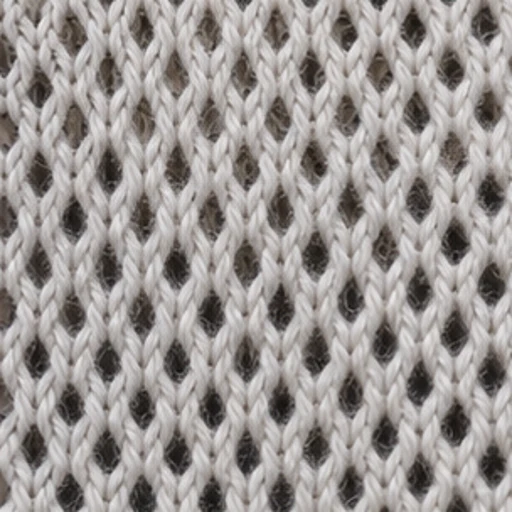
Openings or more open stitch arrangements.
Side note: Several knitting methods can create mesh.
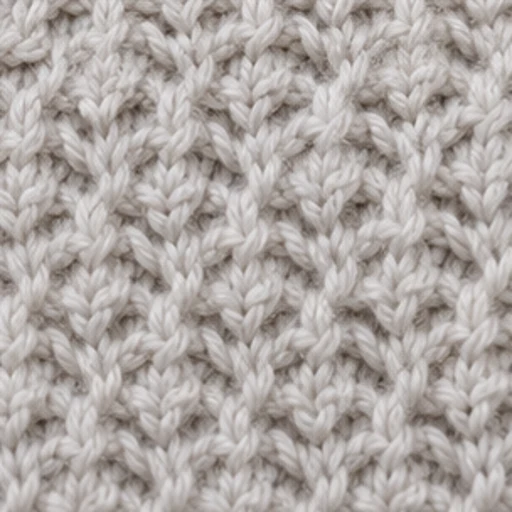
Held loops receive yarn before knitting together.
Side note: Also changes dimensions and stretch.
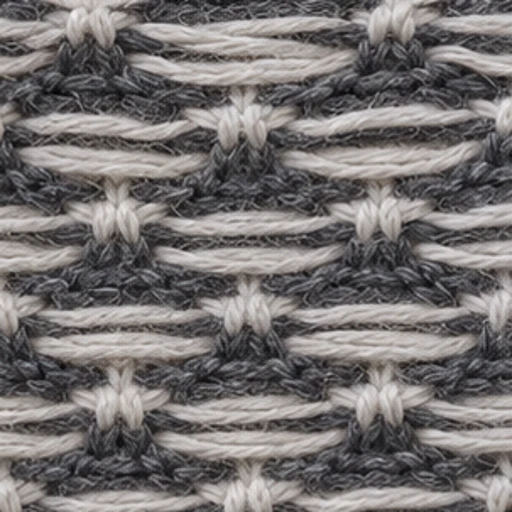
Yarn passes behind selected needles.
Side note: Long internal floats may catch toes.
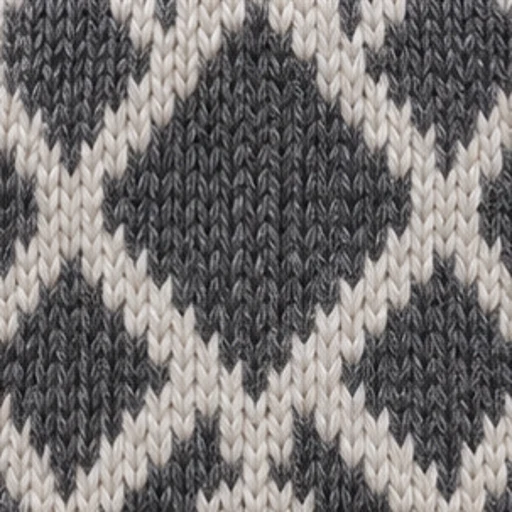
Knitted lettering, logos or colour patterns.
Side note: A pattern technique, not one basic structure.
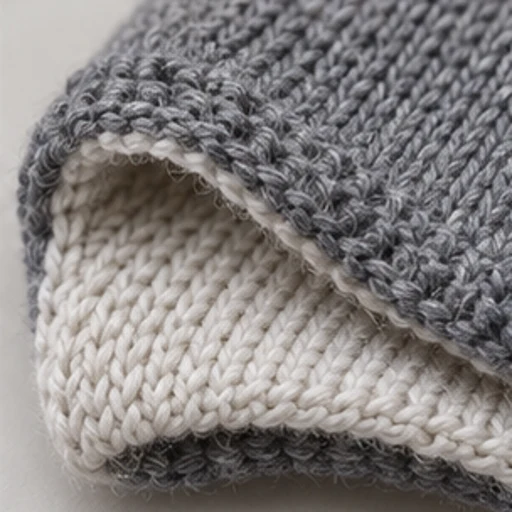
Multiple yarns share stitches in controlled positions.
Side note: Surface contrast illustration; actual yarn placement must be checked.
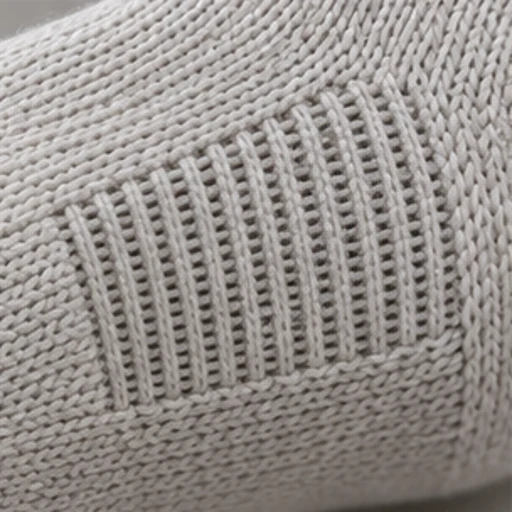
Elastic yarn held within the fabric.
Side note: Appearance does not verify elastic feeding or pressure.
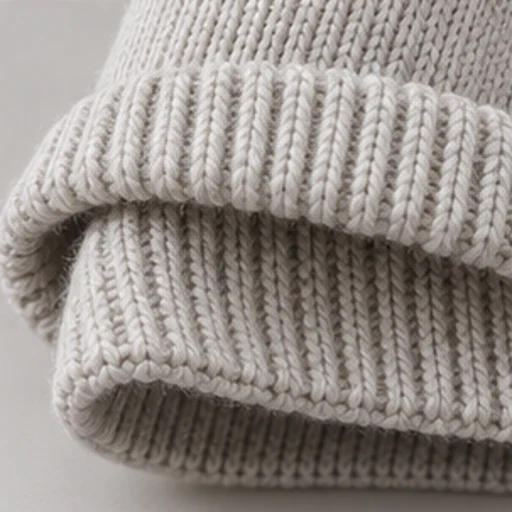
Folded and joined two-layer opening.
Side note: Not necessarily true rib.
Common design options, not requirements for every sock. Available combinations depend on knitting equipment, yarns and product design.
 Materials & knitting
Cushioning, ventilation, fit and wear resistance demand different structures.
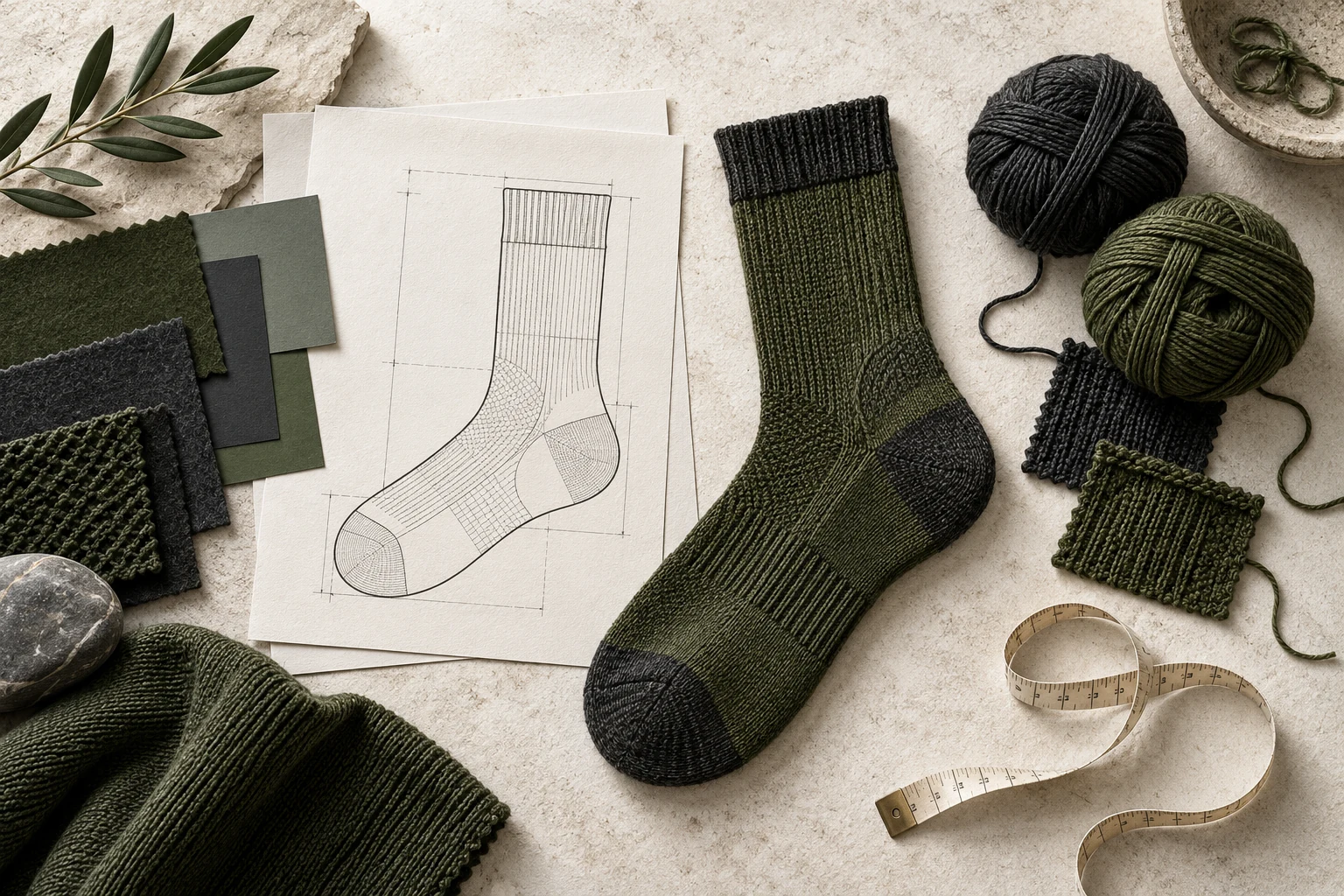 Product development
Turn an idea into a sample that can be evaluated and reproduced.
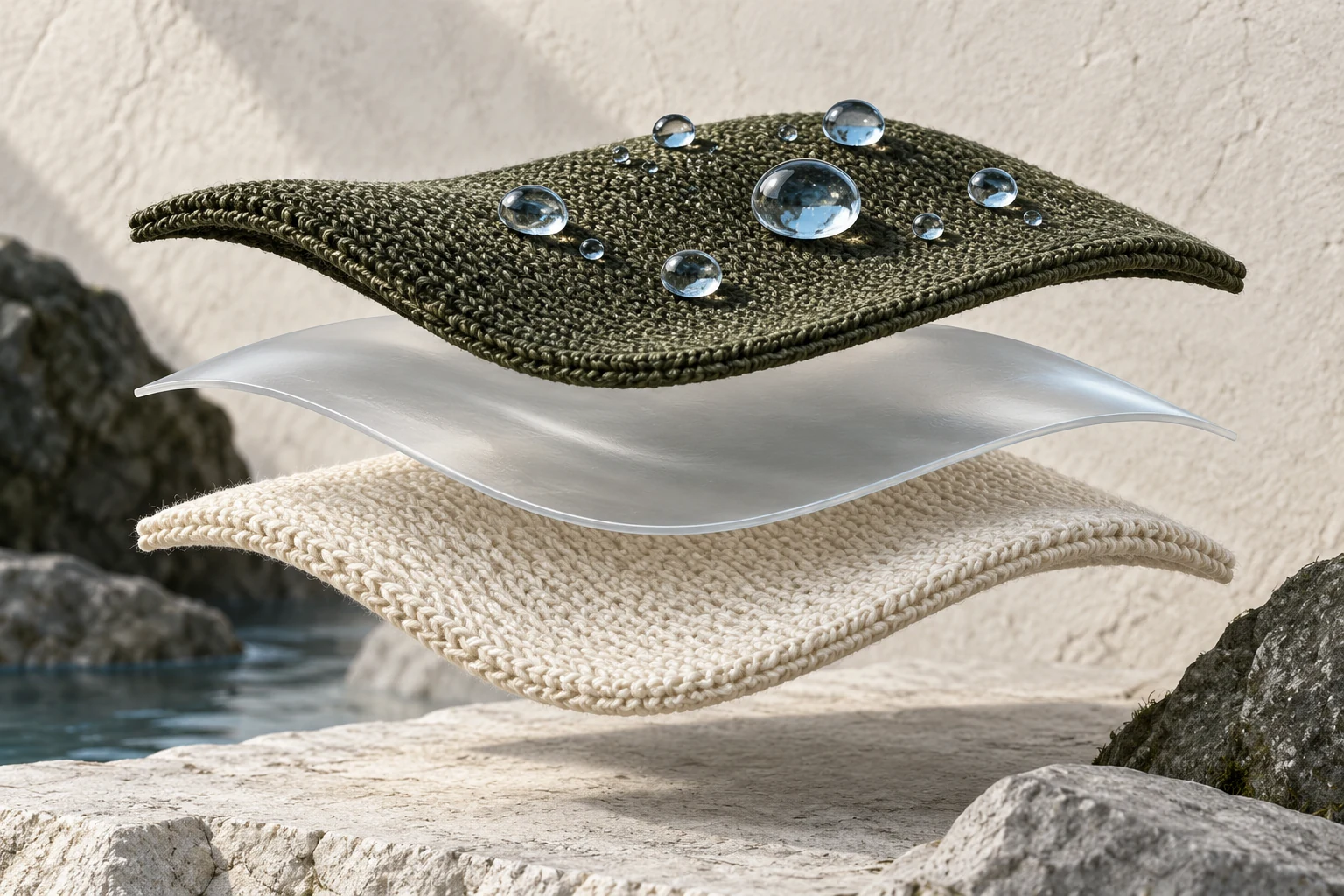 Waterproof technology
Outer knit, membrane, inner layer and fit need to be evaluated together.