
Anti-wicking fabrics: why water movement matters
From our original fabric-testing update: how to investigate liquid travel through a textile.
PUBLISHED 2018-11-23
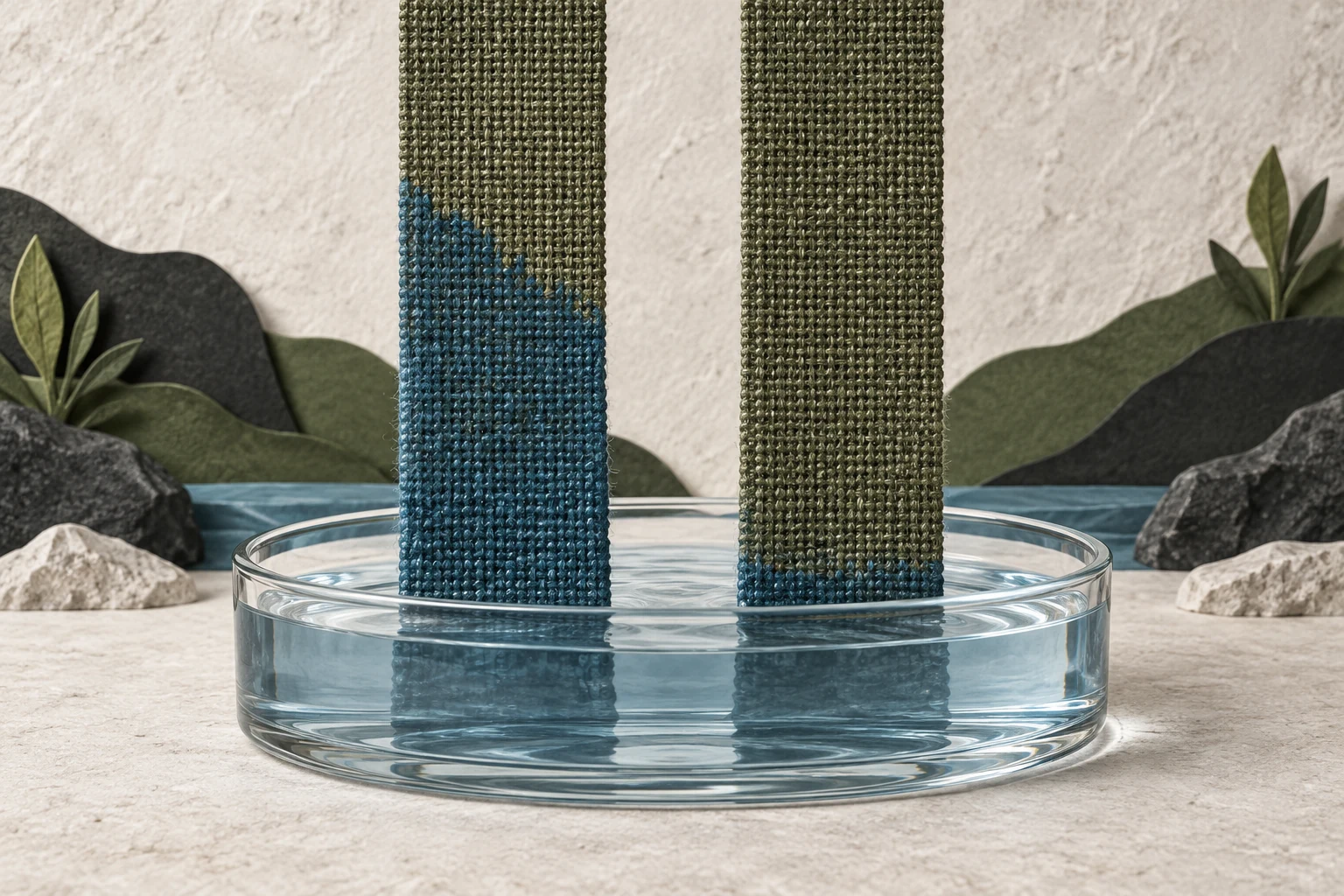
Our original 2018 post introduced a video of an anti-wicking fabric test. The useful question behind the demonstration is whether liquid can travel along yarns or through an edge into a place that should remain dry.
A fabric can resist water pressure across its face while liquid still moves along a yarn, a seam or an exposed edge. To specify anti-wicking behavior, first identify the actual route of water ingress in the intended construction. Then compare candidate yarns, finishes and laminated samples under the same conditions.
Record the specimen orientation, exposure time, liquid, measured travel distance and pass criteria. A video can show the phenomenon, but a repeatable method and recorded results are needed for a production decision. Check that washing, stretching and wear do not change the outcome for the product’s intended use.
For waterproof accessories, evaluate the complete assembly alongside the material: cuffs, edges and joining methods can change the path water takes. Hydrostatic-pressure testing such as ISO 811 answers a separate question about penetration through the fabric face.
← ALL INSIGHTSPut the technical guidance into practice.
Explore the construction, testing and development decisions behind your specification.
Your next product starts here.
Bring your brief. Let’s work through the possibilities.