
Functional knit zones: design each part for its job
Cushioning, ventilation, fit and wear resistance demand different structures.
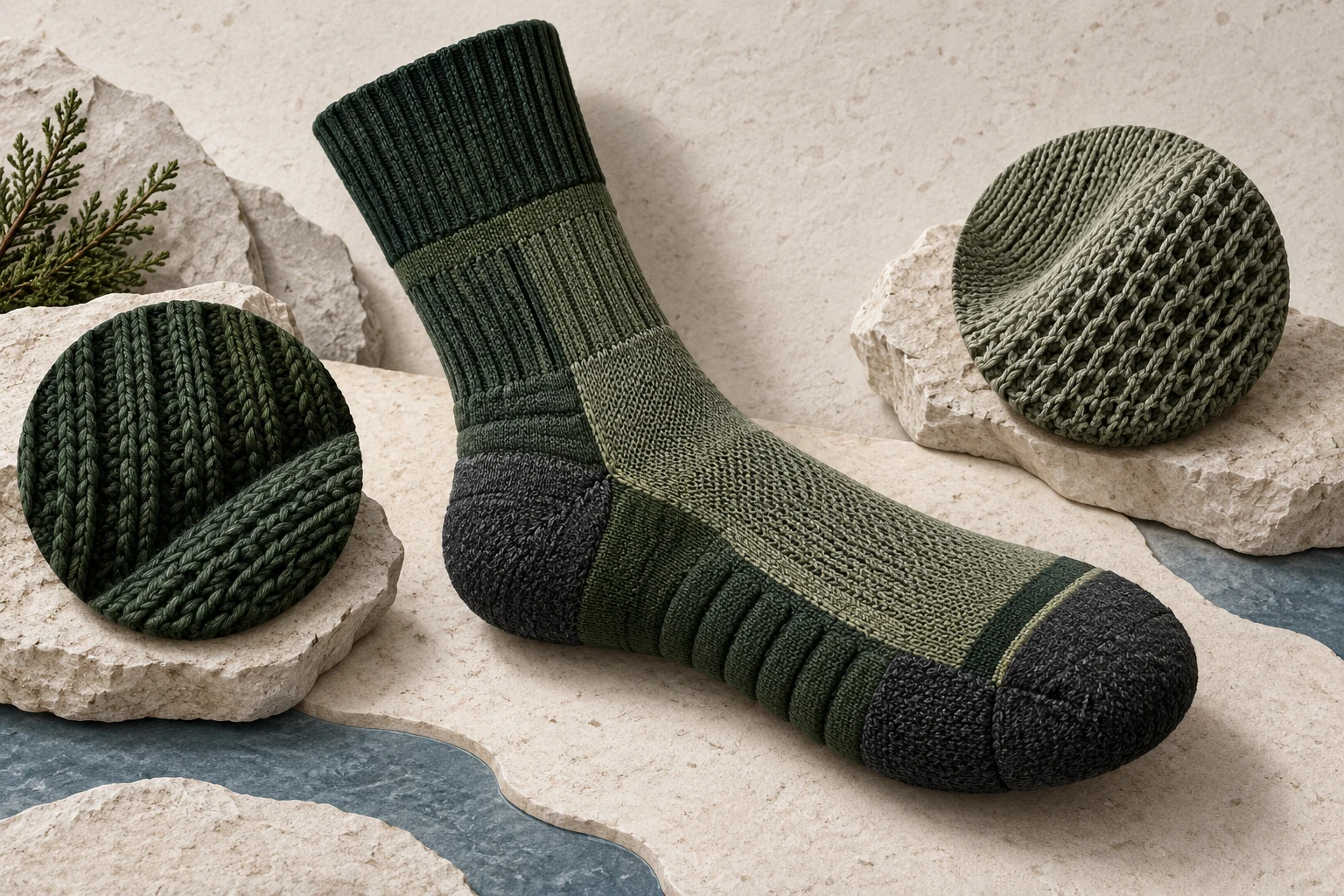
A technical sock is a map of different demands. The cuff needs to stay in place, the heel and toe experience repeated friction, and the instep may benefit from a lighter construction. A single yarn and density throughout rarely expresses those priorities as clearly as planned knit zones.
Define the activity first. A cycling sock inside a close-fitting shoe, a running sock under repetitive impact and a trekking sock inside a boot create different pressure, moisture and abrasion conditions. Choose yarns, cushioning and reinforcement locations around that use case.
Prototype the structure in the intended size range and test it inside the intended footwear. Inspect stretch recovery, bulk at the toe, heel position and any pressure points. A bench-top fabric result can inform the material choice, but wear testing catches fit problems that a flat specimen cannot show.
For waterproof knitted socks, assess the knit together with its membrane and lining. ISO 11092 provides a method for comparing water-vapour resistance of multilayer assemblies; a finished-product brief should also define waterproof testing and fit acceptance separately.
← ALL INSIGHTSPut the technical guidance into practice.
Explore the construction, testing and development decisions behind your specification.
Your next product starts here.
Bring your brief. Let’s work through the possibilities.