
From brief to sample: what a technical product team needs
Turn an idea into a sample that can be evaluated and reproduced.
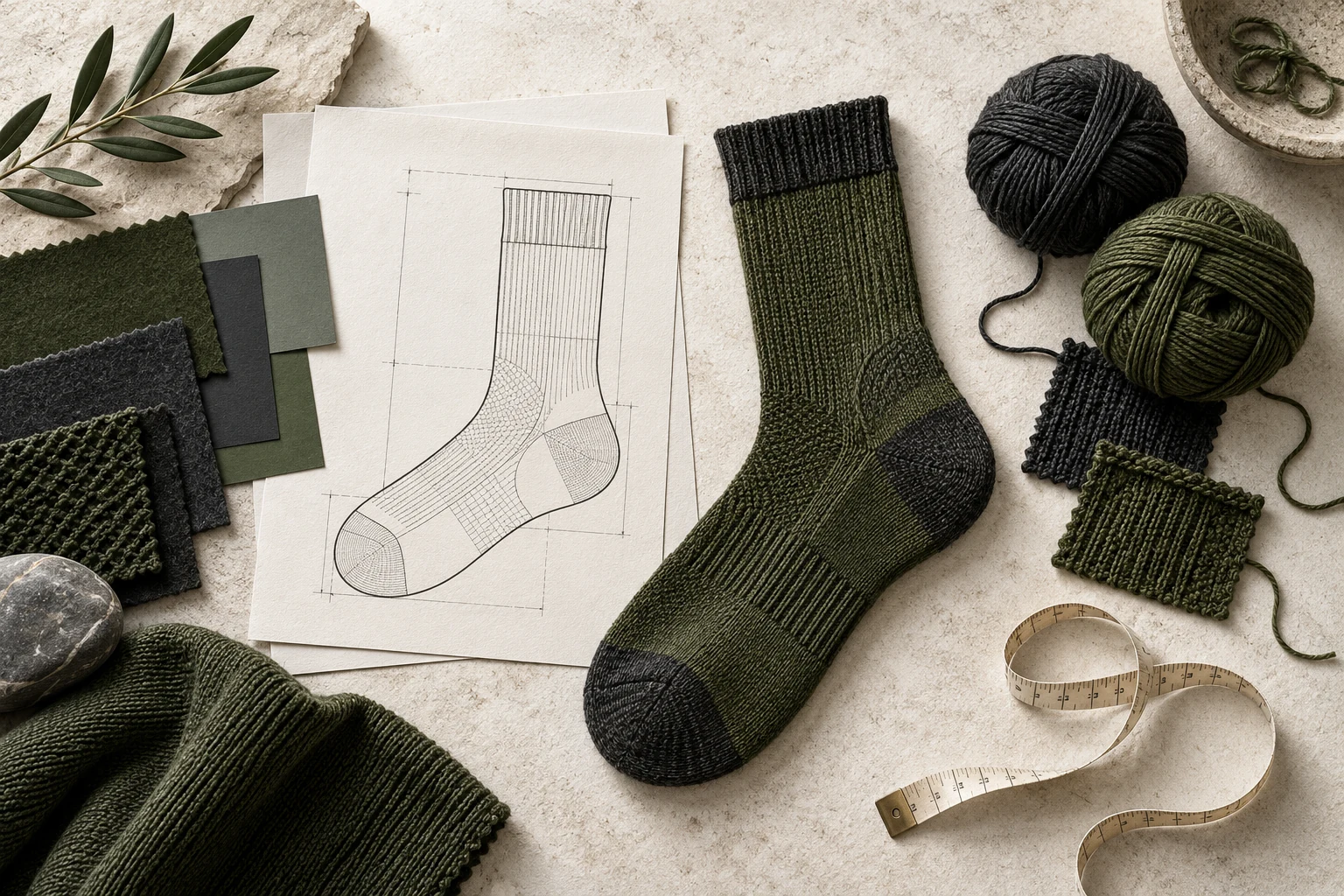
A useful brief defines a use case before it names a fabric. Describe the wearer, activity, climate, footwear or equipment interface and the failure the new product must prevent. “Waterproof cycling shoe cover” is a category; “stays close to a road shoe while pedaling in sustained rain” is a design problem.
Separate requirements from preferences. State target sizing and fit, cuff height, reinforcement locations, color and branding constraints. For measurable performance, specify the test method, specimen and acceptance threshold. ISO 811, for example, measures resistance of fabrics to water penetration under hydrostatic pressure; it does not by itself define the fit or durability of a finished accessory.
Send drawings, a tech pack or reference samples and identify which details are fixed. Include expected order volume and launch timing. The first sample should answer a small set of questions: does the construction fit, is it comfortable in the intended movement, and what should change before a production sample?
Keep a revision record with sample version, yarn and membrane choices, dimensions, test findings and approved changes. A good handoff means the next sample can be compared with the last one rather than rebuilt from memory.
← ALL INSIGHTSPut the technical guidance into practice.
Explore the construction, testing and development decisions behind your specification.
Your next product starts here.
Bring your brief. Let’s work through the possibilities.