
Waterproof ratings: what a hydrostatic head result tells you
A look back at our original waterproof testing note, with a practical guide to reading material results.
PUBLISHED 2018-11-23
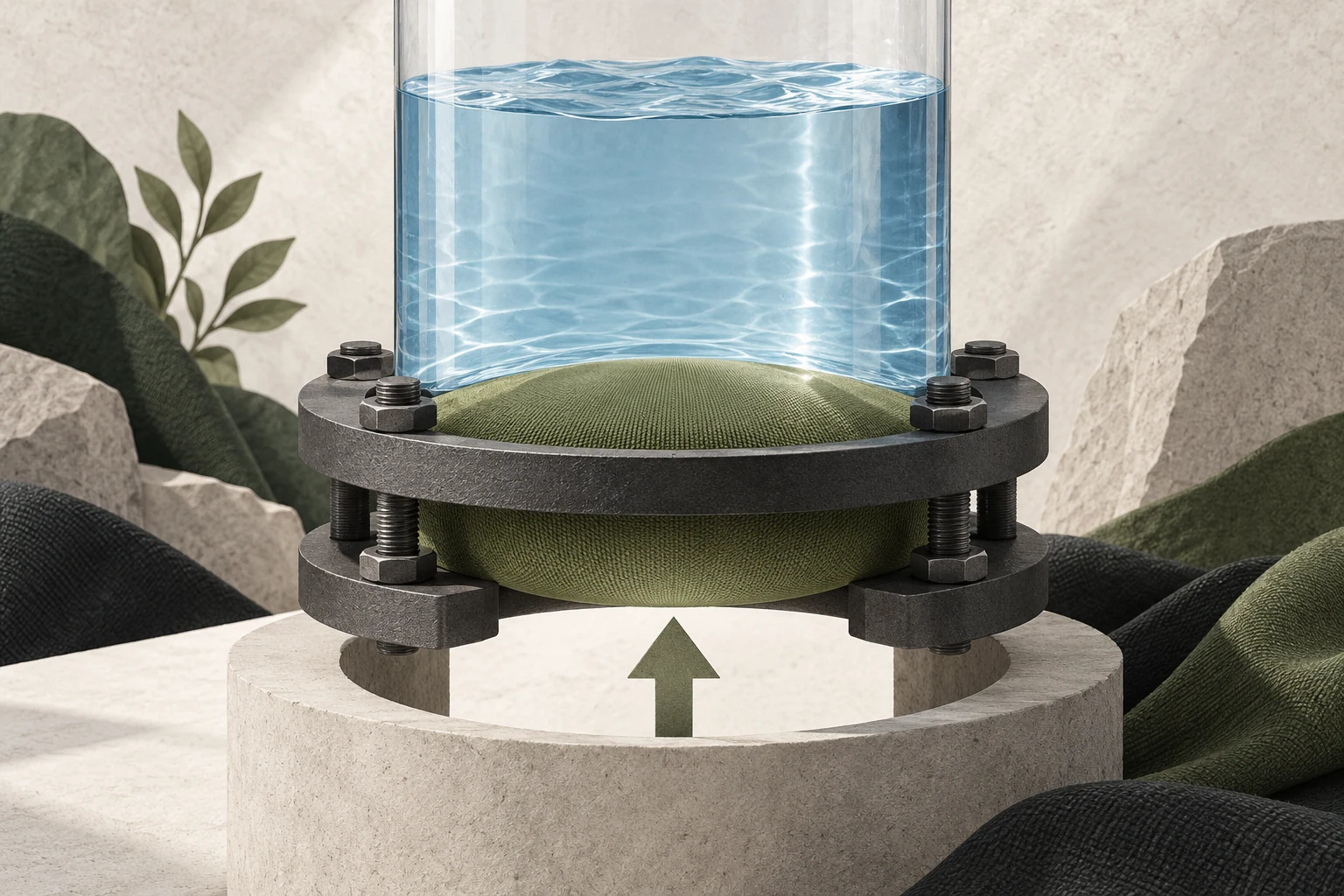
Our original 2018 news post reported a laboratory water-penetration result of 22,325 mm H₂O for a membrane sample. That number describes the tested specimen and method at the time; it is not a blanket specification for every current sock, glove or shoe cover.
Hydrostatic head measures the pressure at which water penetrates a textile specimen. ISO 811 specifies a method for fabrics, and AATCC TM127 is another hydrostatic-pressure method. A result in millimetres of water column describes pressure: 22,325 mm H₂O is approximately 219 kPa, using 1 mm H₂O ≈ 9.80665 Pa. The test method, specimen and conditions must accompany any comparison.
A material result alone does not establish finished-product performance. A sock or glove also has a cuff, shape, abrasion zones and a multilayer construction. For a development brief, agree on the sample or finished article to test, the method, the target result and the acceptance criteria before calling a product waterproof.
Waterproofing and moisture-vapour transport are different measurements. ISO 11092 covers water-vapour resistance of fabrics and multilayer assemblies under steady-state conditions. Ask for the relevant result on the proposed complete construction when evaluating comfort.
← ALL INSIGHTSPut the technical guidance into practice.
Explore the construction, testing and development decisions behind your specification.
Your next product starts here.
Bring your brief. Let’s work through the possibilities.