
A waterproof knitted product is a complete construction
Outer knit, membrane, inner layer and fit need to be evaluated together.
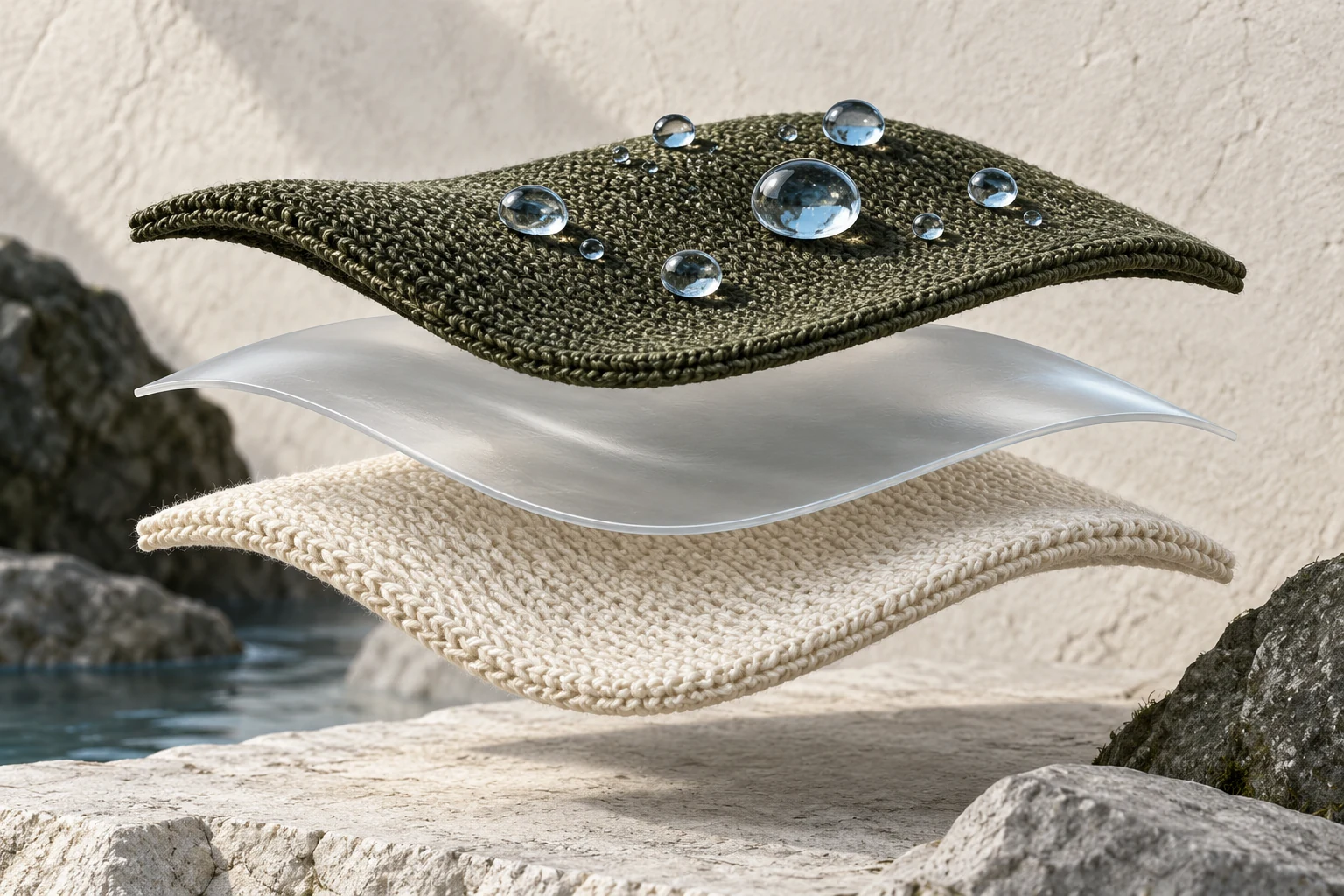
A three-layer knitted construction combines an outer knit, a waterproof membrane and an inner comfort layer. The outer surface sets the appearance and wear behavior; the membrane blocks liquid water; the inner layer affects feel against the skin. Laminating them changes the stretch, thickness and hand feel of the complete textile.
A non-microporous hydrophilic PU membrane has no open pores through which liquid water is intended to pass. Moisture vapor transport is a separate process driven by the vapor pressure gradient and the chemistry and thickness of the membrane. It should be measured on the relevant assembly rather than inferred from a material label.
A hydrostatic-head test addresses resistance to liquid-water penetration. ISO 811 and AATCC TM127 are named methods for that question. ISO 11092 measures water-vapour resistance under steady-state conditions, including multilayer assemblies. These results describe different properties and cannot be substituted for one another.
For a finished sock, glove or shoe cover, construction details such as cuff fit, stretch under use and exposed edges matter. Set test targets on the agreed sample and check fit in the activity and footwear context before approving production.
← ALL INSIGHTSPut the technical guidance into practice.
Explore the construction, testing and development decisions behind your specification.
Your next product starts here.
Bring your brief. Let’s work through the possibilities.