Waterproof barrier
A continuous membrane layer forms the barrier against external liquid water.
 EVARWINSTART A PROJECT ↗
Waterproof membranes and considered construction help balance protection, breathability and comfort.
Three-layer integrated lamination bonds the outer knit, PU membrane and inner comfort knit into one construction. The layers are developed together for the intended fit, feel and application.
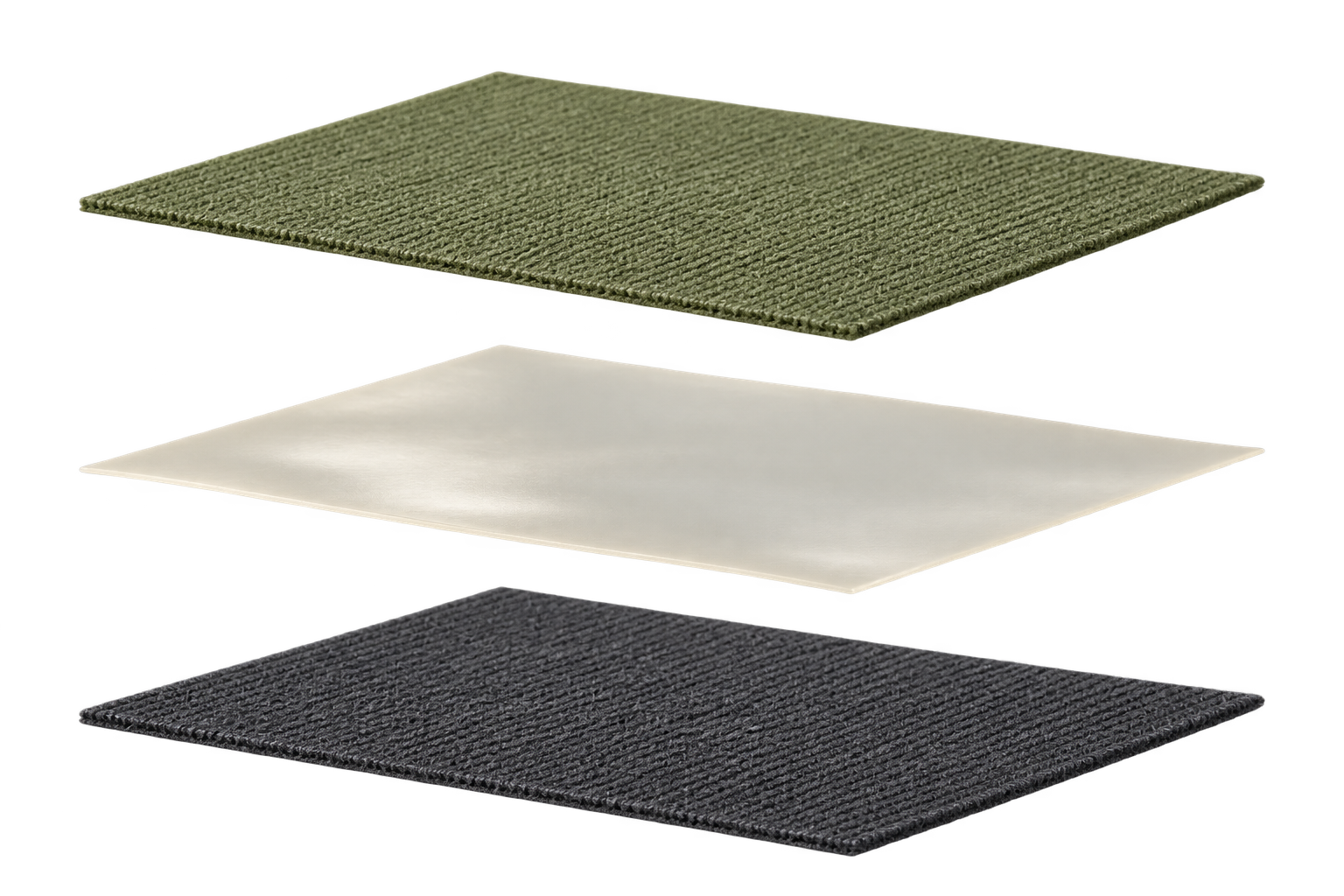
Three-layer integrated lamination · Conceptual illustration
A non-microporous PU membrane selected for waterproof, moisture-vapor-permeable constructions. The membrane is developed together with the outer and inner knits.
A continuous membrane layer forms the barrier against external liquid water.
Supports moisture-vapor transport through the construction; this does not mean open airflow through pores.
The specified membrane is designed not to swell on contact with water.
Membrane colors can be selected to suit the product design.
Yellowing-resistant grades may be specified according to the application.
Bonded into an integrated textile construction. Yarn selection, membrane grade and lamination conditions are developed together, then reviewed on the finished product.
Conceptual transport illustration. Final waterproof and moisture-vapor performance depends on the complete construction and agreed testing. No pore-based mechanism is implied.
Evaluate surface wetting, moisture-vapor transfer, finished-product water resistance and stretch as separate aspects of the complete construction.
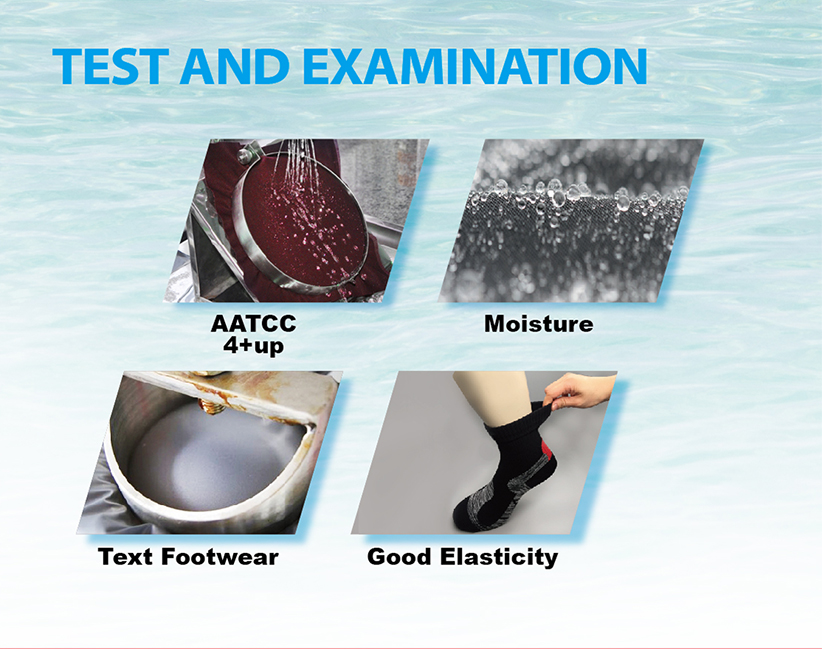
Assess how the outer textile responds to water spray. Surface repellency is separate from the membrane’s resistance to water penetration.
Evaluate moisture-vapor performance using the agreed method and conditions for the selected construction.
Check the assembled product as well as its materials, including construction details and potential water-entry points.
Review flexibility, fit and recovery in the knitted layers and finished product.
Choose materials and finishing around the activity, hand feel and intended performance.
Explore HPPE, reflective and moisture-managing yarns, together with wool-based comfort options.
Specify silicone grip printing, reinforced wear zones and application-specific surface treatments.
Develop jacquard patterns, heat-transfer branding, embroidery and coordinated color palettes.
Develop sports compression, odor-management and children’s patterned sock options, with requirements confirmed during sampling.
Material choices and construction methods must serve the intended application.
Review yarns, membranes and linings for the intended environment.
Develop how the layers fit, flex and work together in a finished product.
Agree on testing methods and requirements for waterproof protection and breathability.
Bring your brief. Let’s work through the possibilities.